
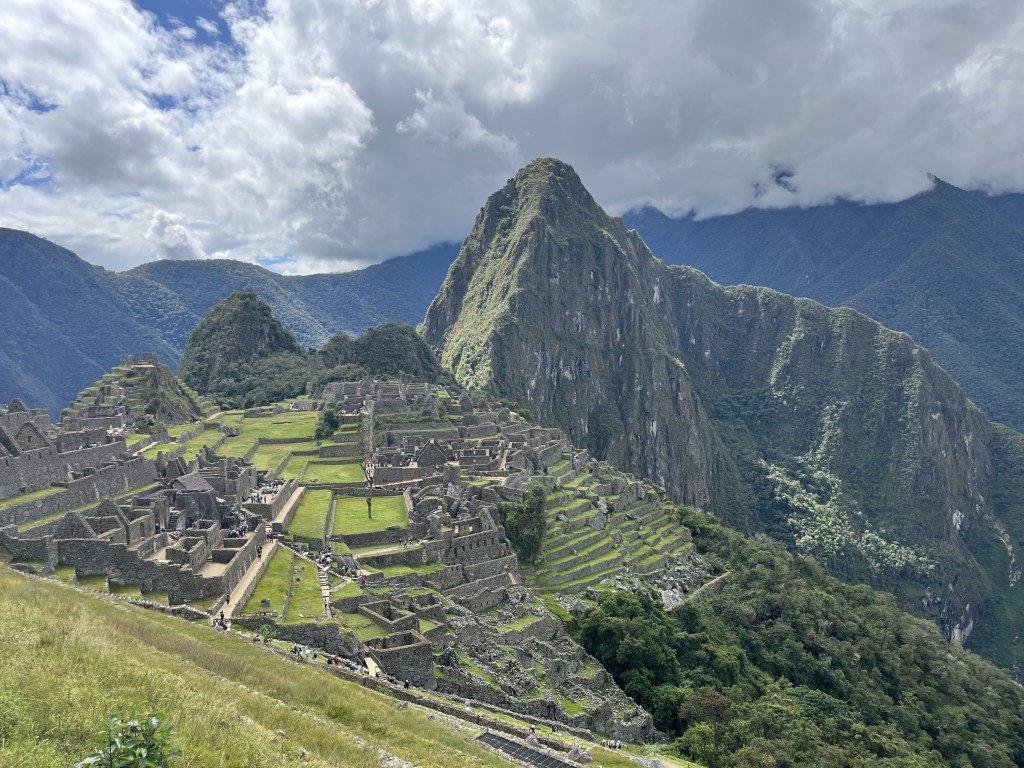
Of all the 7 Wonders of the World, Machu Pichu was the one that called out to me the most. The lush greenery, the ruined dwellings shrouded in mystery and the picture-perfect mountainous landscape, instilled a longing inside me to visit this 15th century citadel. Little did I know that the journey to Machu Pichu would be (both literally and figuratively) full of ups and downs.
Our voyage to the Peruvian Wonder truly began in Ollantaytambo, a sleepy Incan town in the Sacred Valley. Walking its cobbled streets through narrow passageways and between stone buildings, and hearing the running water underneath the cobbles, was a welcome reprieve from the crazy traffic of Lima where we had first set foot on South American soil. Every taxi in the capital seemed to proudly display dents and scratches – war wounds from the battles of the unpredictable Lima roads, that instilled a feeling of uneasiness whilst travelling by car. Lima wasn’t just its roads though – a beautiful coastline, the vibrant neighbourhoods of Baranco and Miraflores, and parks filled with local people dancing, eating and socialising, upturned our unfounded expectations of an impersonal and imposing city. From there we had visited the charming mountainous city of Arequipa, which was populated with colonial-style buildings and surrounded by volcanoes. Now we were away from the bustle of the city and were salivating at the prospect of our main course of the trip.
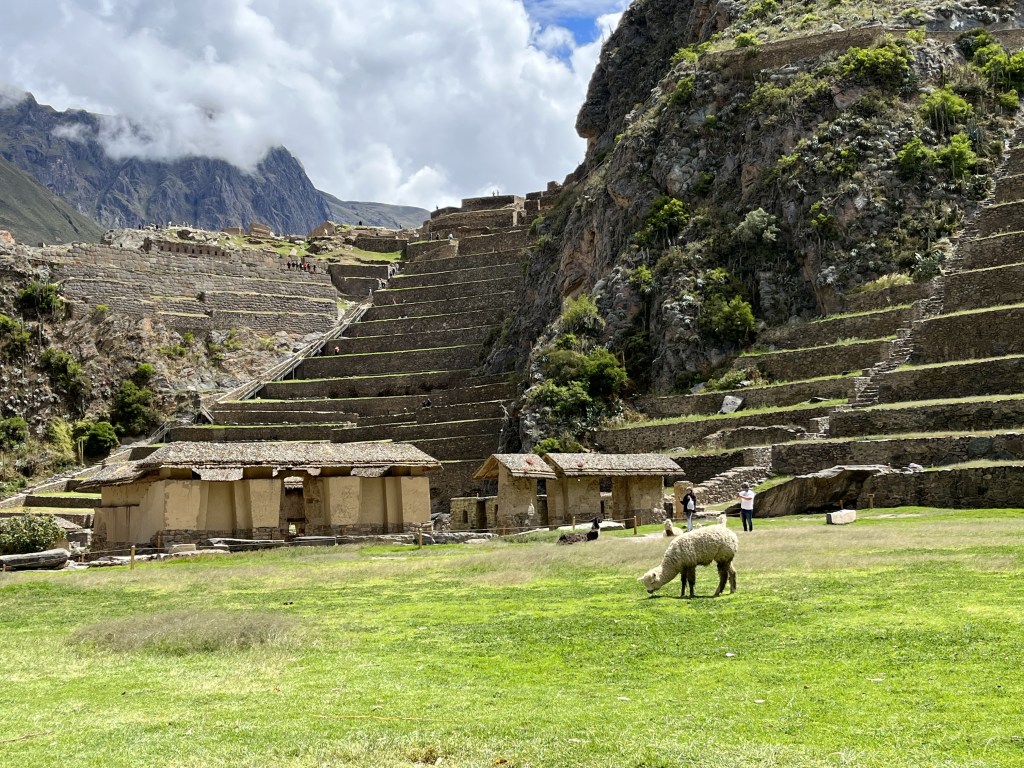
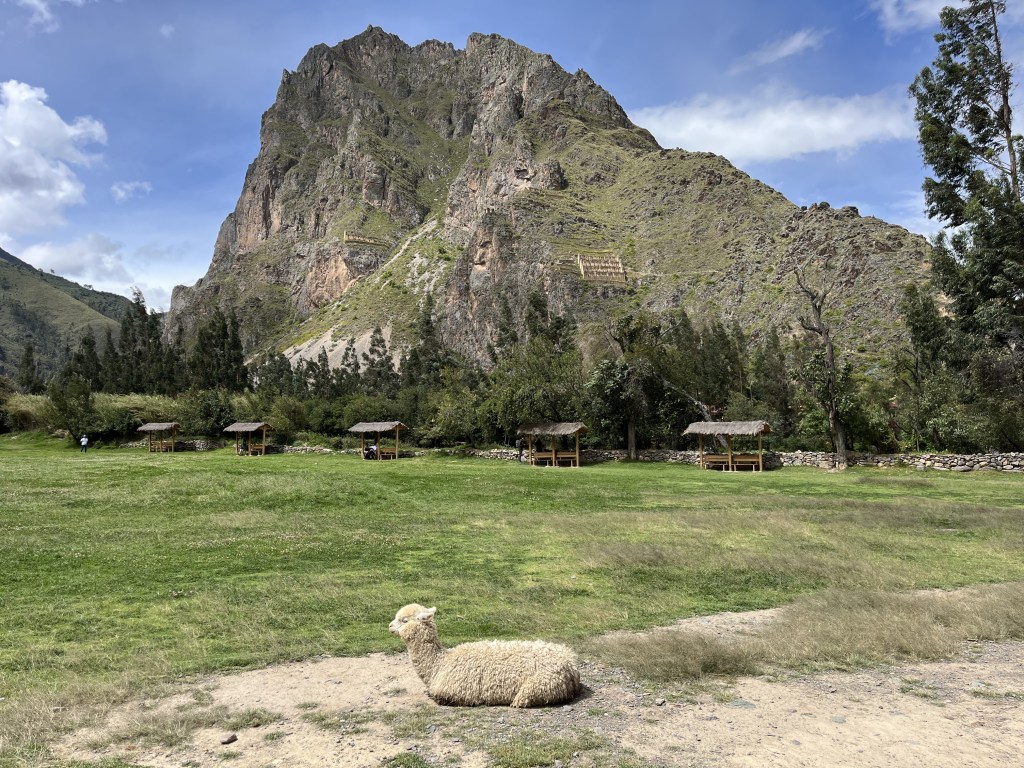
During our stay in Ollantaytambo, we visited the main archaeological site in the town and climbed to the top of the Incan Ruins. Afterwards, we sat watching a family of llamas who were drawing the attention of everyone who passed by. We watched as one particularly obnoxious tourist got way too close to an uncomfortable looking baby llama, pushed her phone into its face and reaching out to touch it. She then tried the same thing with the biggest llama of the group, who gave her several warning grunts before squaring up to her. We were sure this would deter the amateur paparazzi, but she seemed immune to the animal’s aggression and continued her one-person nature documentary, even after receiving a well-deserved double-hoof to the chest. It was mesmerising to watch someone put up with being booted by a llama and yet continue to film a close-up of her assailant. If David Attenborough’s team is looking for a camera operator who can get shots that no-one else can get, I’d highly recommend this woman – Being willing to invade the personal space of animals whilst not being bothered about being thumped by an alpaca are surely desirable skills for the Planet Earth producers.
Several days into our stay in the Sacred Valley we boarded the train. A visual spectacle, the train ride was an hour and a half showcasing the landscapes of the Sacred Valley, culminating in an arrival at Aguas Calientes – a town named for its famous hot springs, although its perhaps even more well-known for its access to Machu Pichu itself.
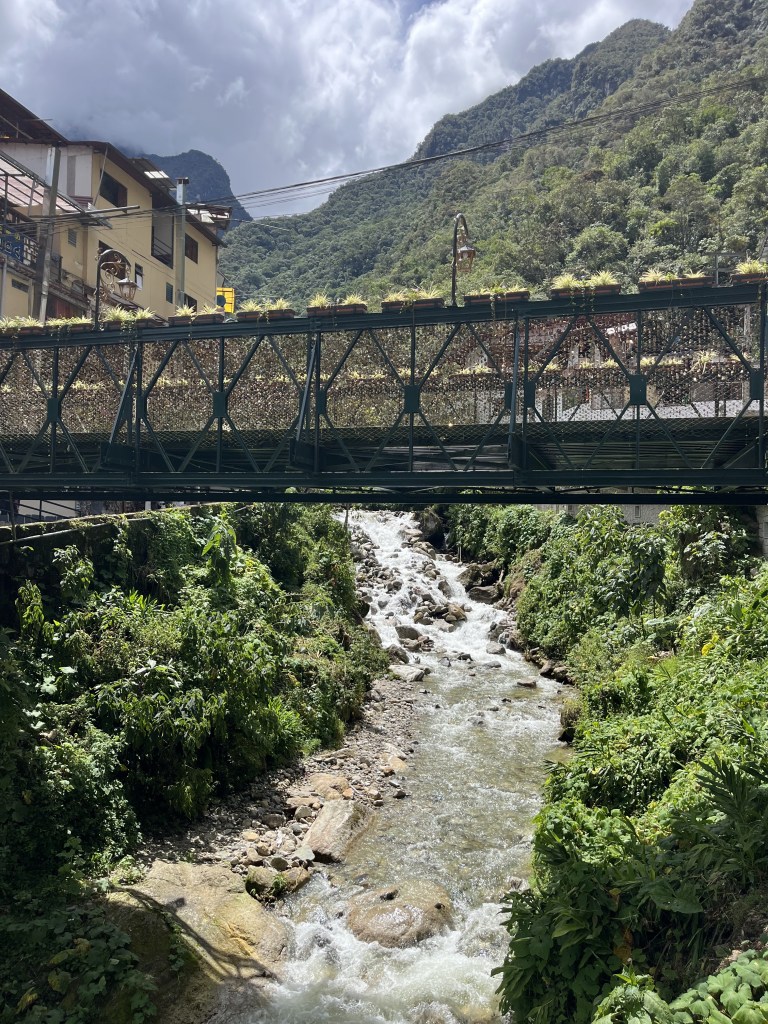
It had been a toss-up between staying in Ollantaytambo or Aguas Calientes to base ourselves for our Machu Pichu visit, and as we arrived in the latter, I could see we had made the right choice. Aguas Calientes was not the idyllic and peaceful place that Ollnataytambo was. It was commercialised, pricier and geared more towards selling things to tourists. Not that it wasn’t without its charms: The Urubamba River, a swift staple throughout the Sacred Valley, ploughs through the centre of the town, as wooden Incan figures stand watch over it as the real Incas may have done several centuries earlier. However, what these long-dead natives may not have presided over was overpriced empanadas and a large collection of tat that was on sale in the shops of Aguas Calientes.
Having bought our entrance tickets well in advance (they sell out quick!), we waited around until closer to our designated timeslot to visit the world wonder. Half an hour before our entrance time we joined the long queue of tourists who waited to board the busses that would shuttle them up to the top of the mountain. As we waited, I noticed a tired, heat-stricken labrador who lay on a nearby step. Eyes half-closed and tongue out, just looking at this dog made me thirsty. Feeling sympathy for this dehydrated mutt, I left my place in the queue, knelt beside it and poured out half of my water bottle in front of its head. The dog’s eyes widened, it jolted up and stormed off down the road, shooting me an annoyed look.
“I was just trying to help!” I called after him. I guess the dog just wanted to bask in the heat in peace without having a pool of water poured onto its favourite step.
The route up from Aguas Calientes to Machu Pichu is a gruelling 10km upfill hike through the jungle that should take around an hour and a half to walk. As we valued our knees, we decided to do what most tourists do – take the bus.
The ride up to the top of the mountain might just have been the windiest journey I’ve ever taken. The road twists and snakes up the hillside beneath the treetops, with an incredible view from the windows of the surrounding forests, ravines and vistas – with more and more of the scenery revealed the higher we ascended. I shoved an earphone into my ear and quickly searched on Spotify for the music from the “Thwomp Thwomp Ruins” track from Mario Kart. It seemed like the perfect musical accompaniment.
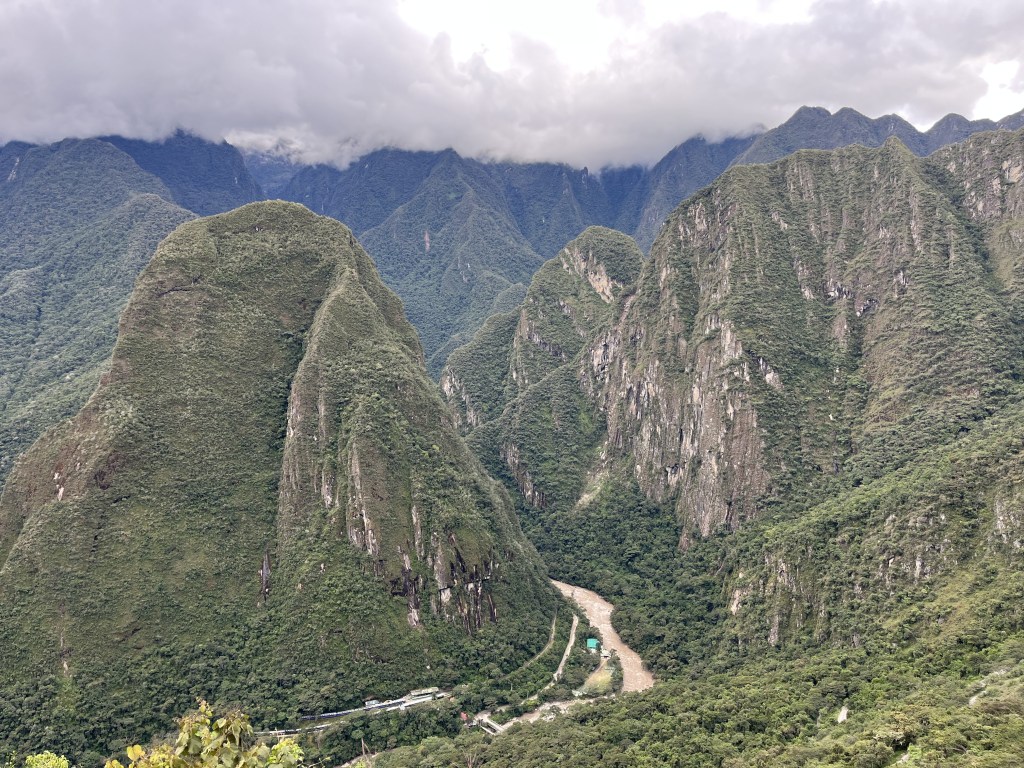
The bus passed several walkers on the route up to Machu Pichu and I laughed to myself at their predicament now they had committed themselves to such an undesirable walk. My internal gloating was soon met with a wave of karma. Well, it was a wave of something anyway- The universe decided to punish my smugness with travel sickness.
I had suffered majorly from motion sickness as a child. Any car journey was my own personal Hell – one trip continuously haunts me from when I was 6 years old and my friend’s parents drove us to the slate mines at Blenau Ffestiniog in North Wales. My friend’s mum gave us cartons of blackcurrant to sip before the journey, which was a decision she came to regret 20 minutes into the drive when she found herself pouring a carrier bag full of purple vomit into a grid on the side of the motorway.
I had mostly outgrown my travel sickness but the constant movement of the bus making its way around the mountainside in the Peruvian heat had opened old wounds – Wounds that were full of sick. I looked over to my girlfriend who was looking pale. She looked worse than I did. I hit the stop button on “Thwomp Thwomp Ruins”. The thought of whimsical plumbers and animals racing around a track whilst being pelted with various shells and fruits was not helping to keep my overpriced empanadas down.
After a seemingly never-ending half an hour of wishing we’d taken the walking route, we arrived at the top. We stumbled from the bus towards the entrance, scanned our tickets and, after a short hike, Machu Pichu revealed itself to us.
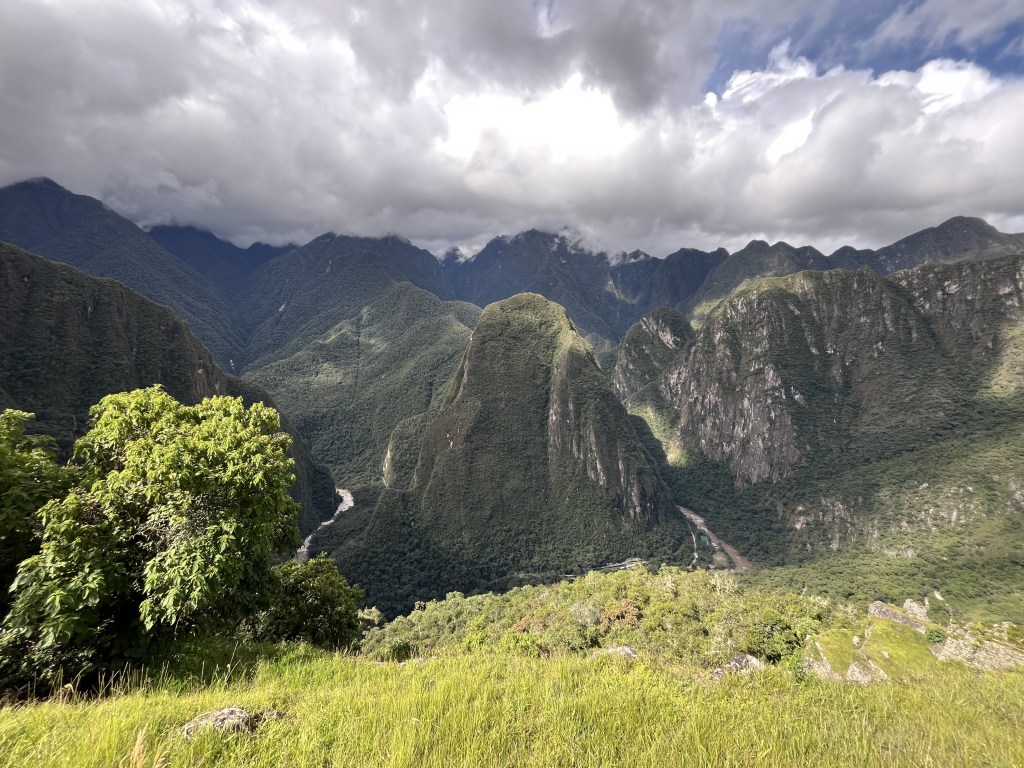
I had read about other travellers reaching the summit and being disappointed with a lack of view due to cloud cover, mist and rain. We had no such thing. The skies were clear and the sun was shining over the citadel. We were treated to a lush green hillside, populated with the stone ruins of a long-dead civilisation and punctuated with rocky crags reaching up towards the sky.
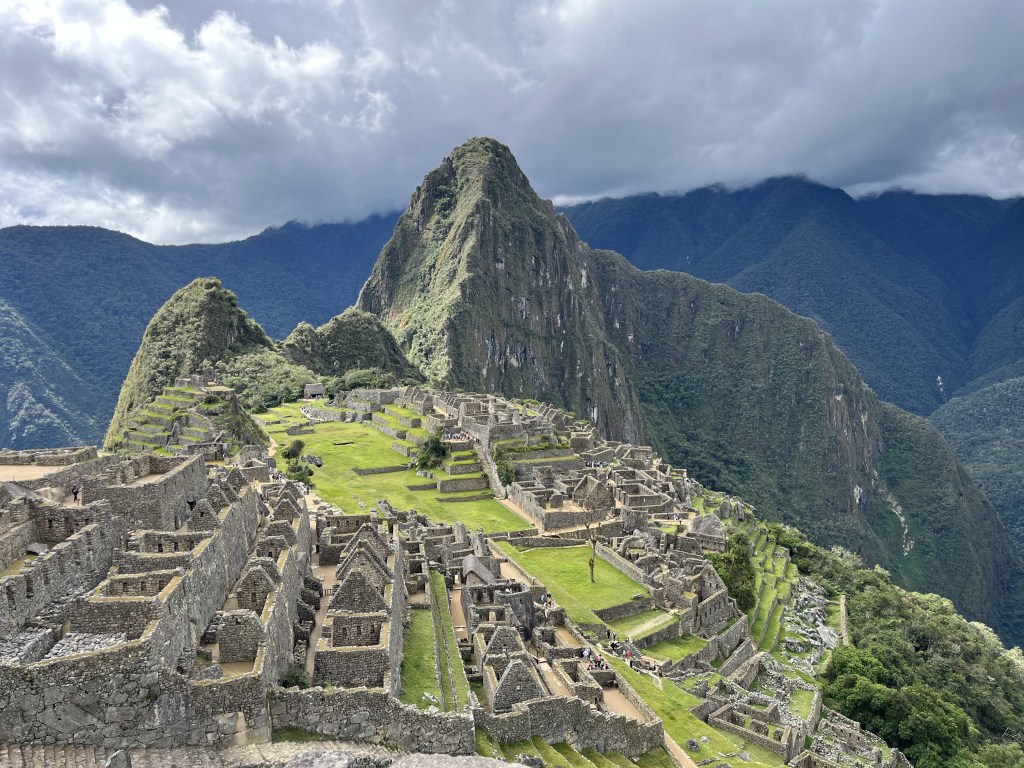
And so there it was. Machu Pichu. In all its glory….although apparently it wasn’t. We were standing in Machu Pichu. We’d been in Machu Pichu all along. The classic “Machu Pichu” picture of the cliff looming over the citadel that we were now witnessing ourselves was not in fact “Machu Pichu” but “Huayna Pichu”. Despite having been lied to it didn’t take away from the wonder and awe of the views we were treated to for our hike around the citadel.
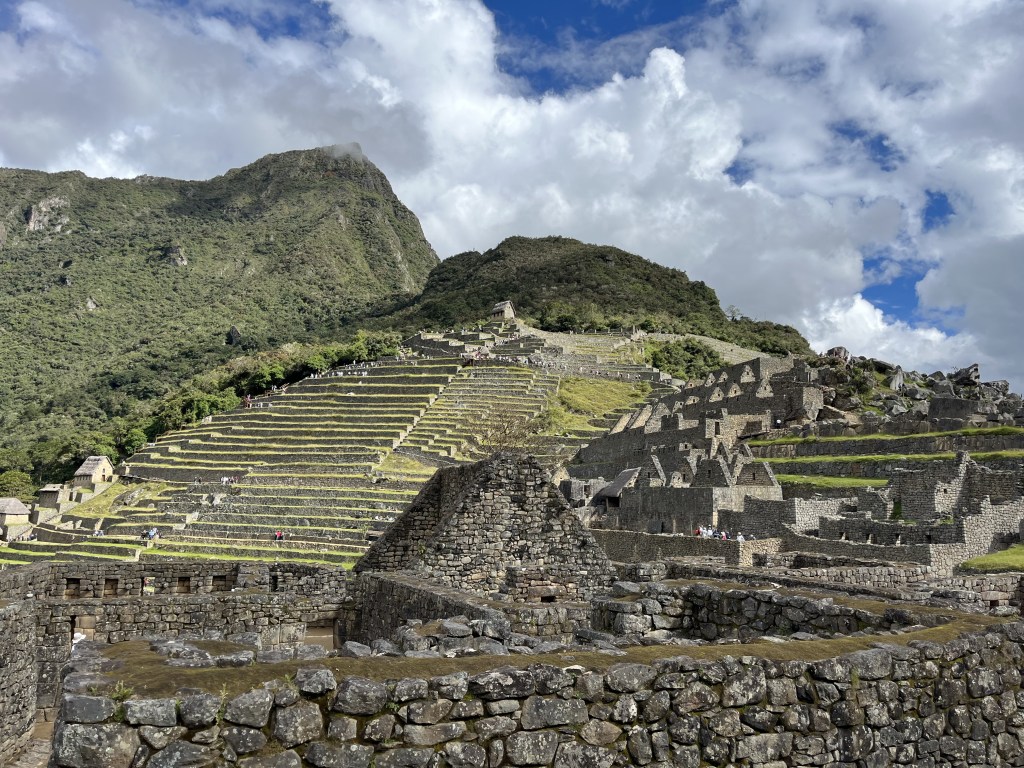
The grandeur of the arrival at the site and the visual spectacle of the World Wonder (alongside a diminishing amount of oxygen in our brains because of the altitude) had instilled in us a sense of euphoria as we began our route around and through the ruins. The perfect combination of the archaeological site and its surrounding areas of natural splendour was a feast for the eyes: an all-you-can-eat buffet of beautiful visual treats that we couldn’t help but gorge on. I was usually limited at a buffet to fourth or fifth helpings by the pathetic capacity of my puny tummy, but this optical smorgasbord allowed unlimited binging.
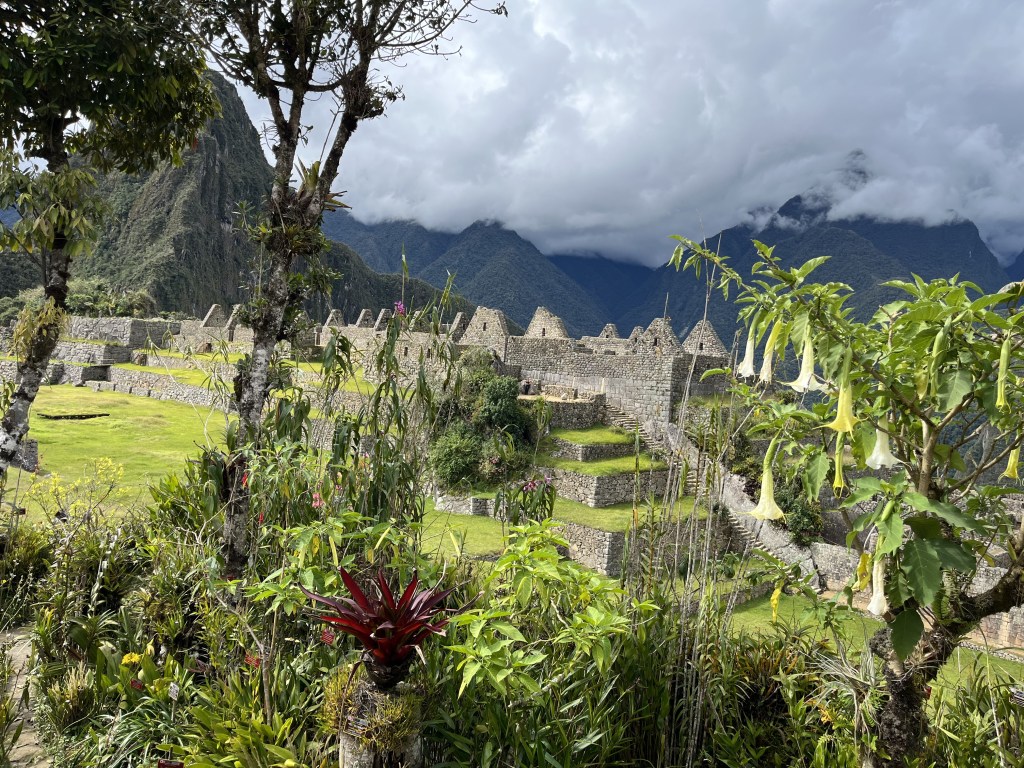
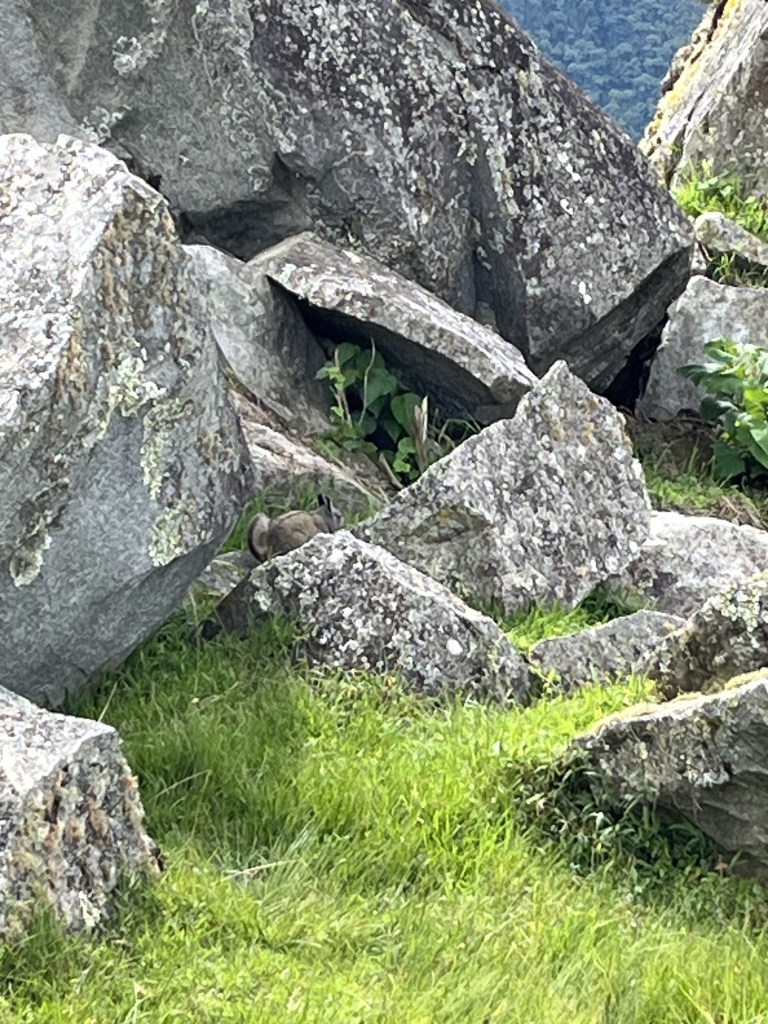
We made our way through what is known as Circuit 2b (There are 4 routes to choose from when purchasing tickets and routes 2A and 2B seemed to be the most comprehensive) – passing through terraces and temples and in and out of the city walls. Not too long into our exploration of the citadel, I noticed movement under some nearby trees. A sleepy faced, rabbit-like creature that I did not recognise, snuffled at the foliage. I pulled out my phone and quickly googled “Sleepy-faced, rabbit-like creature in Machu Pichu”- Google returned with “Vizcacha”. I watched my new discovery as it went about its day, nibbling leaves, unaware I was staring intently at it.
A Spanish-speaking tour group made its way towards me up the trail. The Peruvian guide stopped by my side and looked at the creature.
I turned to him and said “Vizcacha”, as if I wasn’t unfamiliar with this animal only 5 minutes ago.
He nodded, looking impressed. “Vizcacha”.
As we approached the end of the route, the sun had begun to make its own descent, and a layer of mist started to obscure the picturesque hillsides. We took our last look at Huayna Pichu, the citadel and the panoramic views, and made our way towards the bus. After a day of awe and wonder, it was time to face the nightmare of…. the return bus journey. More rickety roads, more nausea and much more travel sickness awaited us, but it was a small price to pay for an unforgettable visit.

 Halestorm Travel